


Lenders are under growing pressure to bring AI into underwriting. For many, the harder question is not which model to use, but whether the data, the credit policy and the evidence trail behind each decision are good enough to trust it.
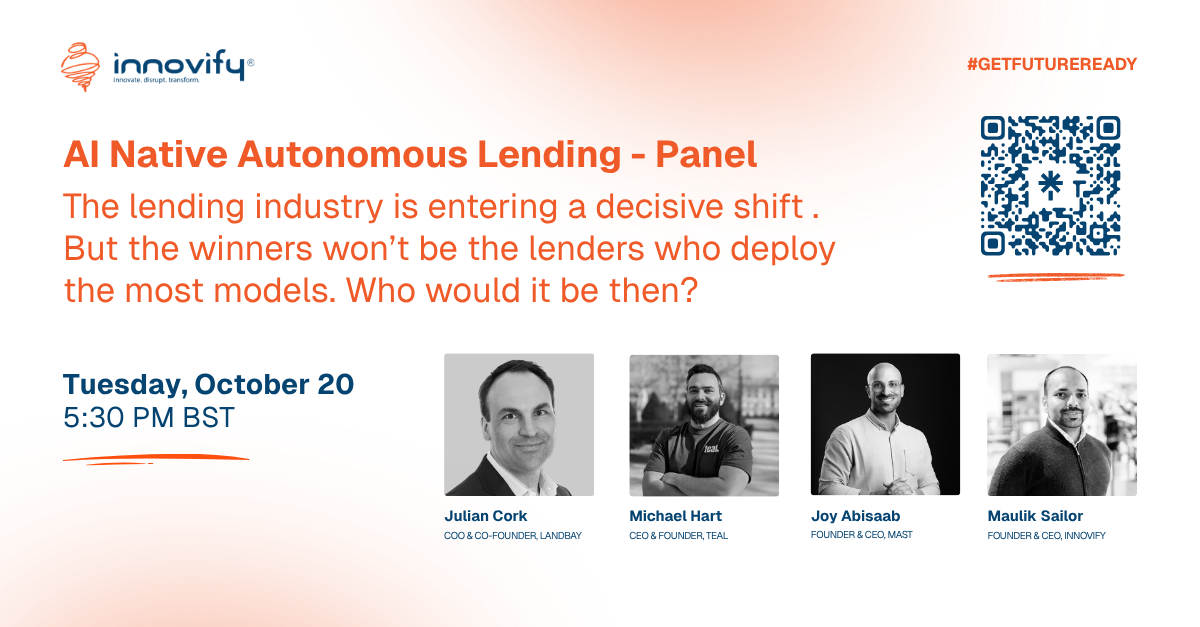
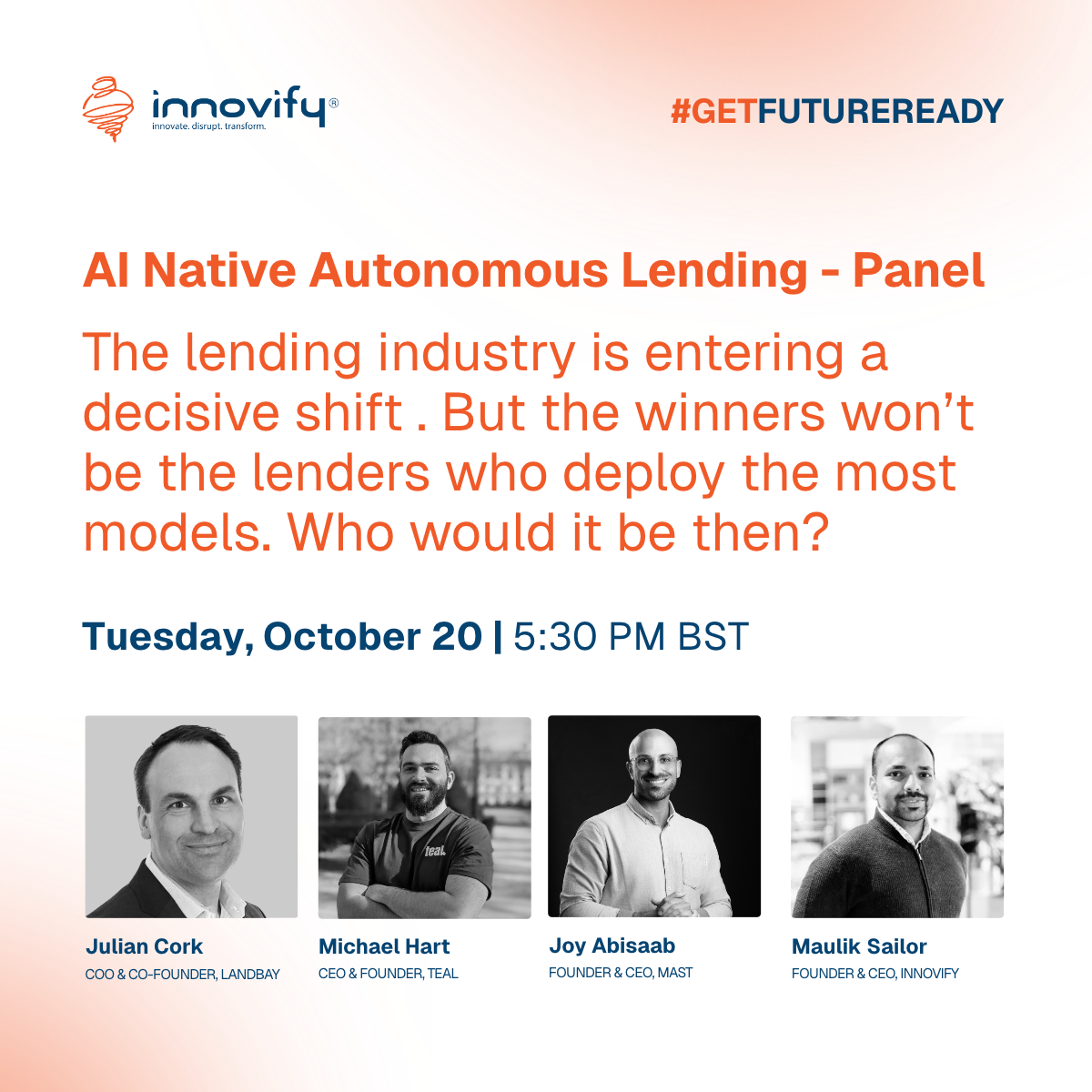
In this episode of the GetFutureReady Podcast, host Maulik Sailor, Founder of Innovify, leads a panel on AI Native Autonomous Lending, hosted at Landbay's London headquarters. He is joined by Julian Cork, COO of Landbay, Michael Hart, CEO of Goteal.co, and Joy Abisaab, CEO of Mast Mortgages.
The discussion covers data quality, how to evidence underwriting decisions, moving legacy credit policy into the AI world, whether human reviewers are still needed, fraud, and where fully automated lending decisions are likely to start. The views shared are opinion, not regulatory or legal advice.
The panel's starting point is simple: you have to get your data quality in order with AI, otherwise it is garbage in, garbage out. Better models do not rescue poor inputs, so lenders need to be confident in the data before they automate anything that depends on it.
A big issue with AI models in lending is demonstrability and provability. Lenders need to show how an underwriting decision, or any other decision, was reached, and to evidence it to the underlying lenders who fund the loans. A model that cannot explain itself is hard to defend to the people whose money is at stake.
Many lenders still rely on credit policies that are maintained manually, and partly exist in people's heads. The challenge is how to move that information and knowledge into the AI world.
The panel's view is that this cannot be done as a big bang. It needs to be rolled out gradually, through incremental AI features.
The panel debated whether human reviewers are needed at all. If a person is presented with seamless, instant data, will they simply click yes or no out of habit and make decisions without thinking? The question is not only whether a human is in the process, but whether that human is adding real judgement.
The conversation also looked at the AI arms race in lending fraud. Fraudsters are applying with fake, AI-generated documents, while AI tools are being used to detect them. For lenders, fraud defence is now part of the same AI conversation as underwriting itself.
Fully automated AI lending decisions are likely to start with small-value consumer loans, rather than the larger, often business-focused loans that were the focus of this panel. The decision-making and the data points required are simpler, and the unit economics are tighter, which makes the move to AI automation more pressing.
In the closing summary, the panel concluded that the AI-driven future of lending is largely about data handling and presentation to the human underwriter, who remains in the loop. The aim is a more seamless, quicker end-to-end experience.
AI decisions are only as good as the data behind them. If the inputs are poor, the outputs will be poor too, which is why the panel put getting data quality in order ahead of everything else.
Lenders need to evidence how underwriting and other decisions were made, including to the underlying lenders that fund the loans. A decision that cannot be demonstrated or proved is hard to rely on.
Legacy credit policies are often maintained manually and partly held in people's heads, so moving that knowledge into AI is hard to do in one step. The panel's view is that it should be rolled out gradually, through incremental AI features.
The panel debated this. A person shown seamless, instant data may click yes or no out of habit, so the value of the human depends on whether they apply real judgement. The panel's closing view was that the human underwriter stays in the loop.
Fraudsters are applying with fake, AI-generated documents, and AI tools are being used to detect them, creating an arms race between the two sides.
With small-value consumer loans rather than larger business lending. The decisions and data points are simpler and the unit economics are tighter, so the case for automation is more pressing.