



When a high-street retailer like Primark, or a luxury watch seller, starts offering buy now pay later or a branded card, who actually carries the regulatory risk: the brand, or the provider behind it?
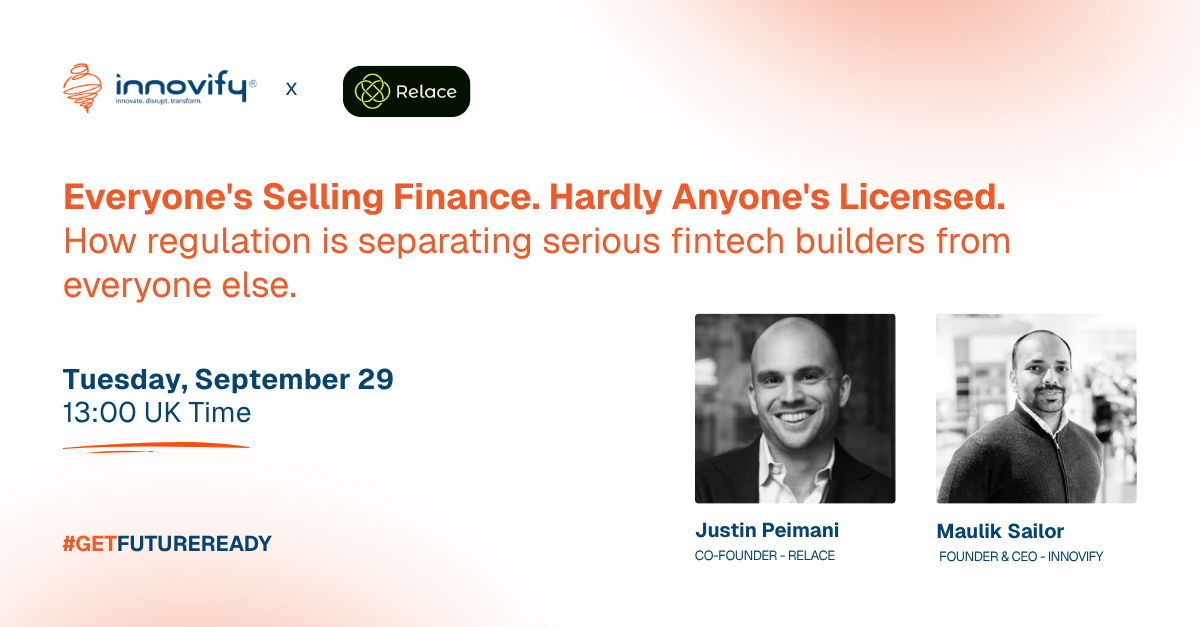
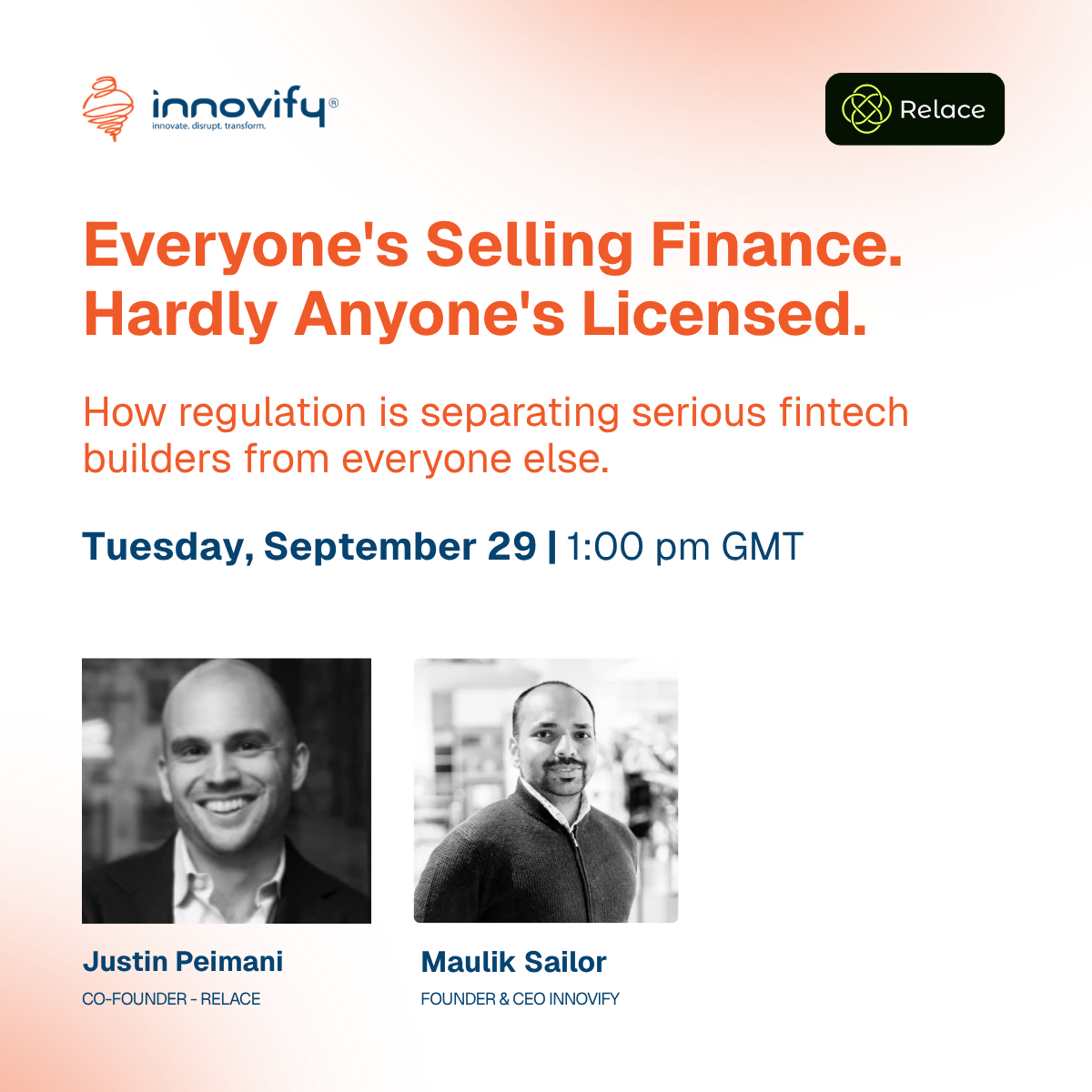
In this episode of the GetFutureReady Podcast, host Maulik Sailor, Founder and CEO of Innovify, is joined by Justin Peimani, co-founder of Relays, a compliance platform working closely with the UK's FCA. It's a follow-on to an earlier episode with Peimani's co-founder, Lubomira, and this time the conversation turns to who actually carries the regulatory burden when a non-financial brand starts selling financial products.
Peimani explains that a brand can become a regulated entity depending on exactly what product it offers. Buy now pay later, for example, became a regulated activity in the UK this year, meaning brands offering it take on reporting and conduct obligations. The size of the brand changes what's at stake: a multi-billion-pound retailer faces different scrutiny than a smaller, pre-Series A firm, but even a small business that ignores its regulatory posture can run into trouble later, including when it comes to raising capital, since investors will ask what exactly is regulated and whether the right licences are in place.
The conversation turns to what happens when a brand routes its offering through a provider such as Klarna or Zilch. Scale providers often take on some of the regulatory work themselves and pass on the benefit of their permissions and licences, but responsibility ultimately sits with the brand or retailer to manage the relationship, particularly given the risk created for less financially literate customers.
For firms starting out, Peimani describes the "appointed representative" regime as a common first step: a smaller firm operates under an existing licence held by another firm, which takes on some of the compliance and regulatory work as a service. As the business grows, it typically progresses to bringing in a chief compliance officer or head of compliance to manage the relationship with the regulator directly, since a bigger customer base and market impact bring more regulatory questions.
Peimani flags a growing risk alongside financial regulation: staff feeding customer data into public LLMs such as ChatGPT and Claude. GDPR already governs what a brand can do with customer data, and while a large company can't stop every employee from using a tool like Claude, it can sanction misuse and consider tighter internal controls, especially where regulated or sensitive customer information is involved.
Looking at AI-native challenger banks, Peimani argues the barrier to building one today isn't the technology, which is increasingly cheap and available, but trust: the relationships, licences, and regulatory comfort that take time to build. Businesses still need licensing and ongoing interactions with regulators as they grow, and skipping that groundwork tends to create bigger problems later, whether entering a new country or launching a new product.
Asked how the UK stacks up, Peimani rates the FCA among the top-tier regulators globally for how actively it engages with firms, through innovation projects, sandboxes, and conferences. Dubai and Abu Dhabi are singled out as increasingly active in courting financial services firms with schemes to attract capital, while Singapore's innovation programmes have influenced the FCA's own approach. London's edge, in Peimani's view, is the combination of a conducive regulatory environment, an established base of banks and lenders, and a concentration of technical and regulatory talent in one city that few other markets can match.
Yes. Buy now pay later became a regulated activity in the UK this year, meaning brands offering it directly take on reporting and conduct obligations.
Scale providers often take on part of the regulatory work and share the benefit of their licences, but ultimate responsibility for managing the offering sits with the brand or retailer.
It's a regime that lets a smaller firm operate under an existing licence held by another firm, which takes on some compliance and regulatory work as a service, before the smaller firm builds its own compliance function.
It raises GDPR questions about what a brand can do with customer data, and regulated firms are increasingly restricting staff use of public LLMs with sensitive or regulated data.
Trust, not technology. The technology to build financial products is cheap and available; the harder part is the licensing, regulatory relationships, and customer trust built over time.
Peimani rates the FCA among the top-tier regulators globally for its active engagement with firms, while noting Dubai and Abu Dhabi are aggressively courting fintech firms and Singapore's programmes have influenced the FCA's own innovation work; London's density of regulatory and technical talent remains a distinguishing edge.
Maulik Sailor (00:05)
Okay, it's showing me connected, it's showing me live what's happening on LinkedIn.
Maulik Sailor (00:19)
I'm still not seeing preview on LinkedIn.
Maulik Sailor (00:34)
Right, I'm not s okay, it's coming, it's coming. Actually, we are live on LinkedIn.
Justin Peimani (00:38)
Okay, perfect.
Maulik Sailor (00:44)
We are live on LinkedIn.
Maulik Sailor (00:49)
Right. So We are finally live on LinkedIn. Thanks for folks who has been joining us today. I'm your host, Mollik Saylor. I'm I'm founder of Pinovify and run the community Get Future Ready, where we bring together the founders, operators, you know, and all the movers and seekers of fintech industry, particularly in the UK, but also in different locations, the key FinTech ecosystems. And our objective is to is to talk about stuff that really matters in in innovating in the financial services space or banking and insurance spaces, right? and we wanna hear from the people who are at it every single day. And we want to hear their own experiences, any learnings or insights that they may have, which may not you may not find on Google anywhere, right? And it's our own personal experiences. And that's what we wanna bring out to every single session. that we host. Now, a few weeks back, we hosted a session about regulations. You know, how can a startup or a corporate can really adopt regulations and compliances as their strategic advantage and outdo their competitives. We spoke to a lovely guest, Lubomira, who was a co-founder of Relays and and we discussed quite a few topics around regulations, you know, what are those, you know, why you should do you should adopt certain regulations or at least work to with regulators to get your product off the ground and so forth. And today we we had an amazing response to that particular podcast. and we decided to do a follow-on episode for the same topic around regulation, but with a slightly different tweet. So today I am joined with Justin Pimani, who is co-founder of Lubomera. They're working both together on Relays.
Maulik Sailor (02:50)
which is a compliance platform. but before we go into into into the topic, Justin, I would love to welcome you to our live podcast here today, on on LinkedIn. Would be great if you can introduce yourself and again your company for our live audience. That would be great.
Justin Peimani (03:11)
Sure. No, first of all, Molly, thank thank you for having me. It's a pleasure again. And hopefully again this conversation is valuable to the entire kind of Innovify community and get future ready. so a little bit about myself. As you can maybe tell from my accent, I'm I'm from Canada originally. So I I started my career as a corporate lawyer, but then I've spent the last 10 years building software companies. mostly with a focus on enterprise and and large enterprise. And for the last five years before I started Relays, I was particularly focused on heavily regulated businesses. So think of banks, telcos, insurance. in our last business we supported and a 20 of the top 50 global banks, several hundred asset wealth managers, as well as several hundred fintechs. So we really had that, you know, that courtside seat to kind of what firms were experiencing in terms of challenges, particularly from the regulatory side. And then when Lubamira and I came together to start relays, you know, our goal was very simple. It's how do we make it easier for firms to comply with regulation? Because whether you're a fintech, whether you're a bank, you're a wealth manager. You have rules that you're subject to. And a lot of that work today is done manually by people or bringing in third-party consultants. And so we saw a real opportunity to bring technology kind of into that mix and to provide teams with more leverage, right? So whether you're a small business looking to get regulated, and I'm sure we're going to talk a little bit more about that today, or whether you're a large bank looking to do kind of more with what you have or to make better use of the resources.
Maulik Sailor (04:28)
Yeah, yeah, yeah.
Justin Peimani (04:51)
So we build technology to help all firms do that. And a particular focus for us right now, as we're based in London and the team is fully here in London, we're collaborating with the regulator here, the FCA, to help firms bring some specific solutions to market. And you'll see more from us on that over the coming months.
Maulik Sailor (05:01)
Yeah.
Maulik Sailor (05:12)
Okay, that's wonderful. That's wonderful, Justin. Now, you know, we hosted Lubomida a few weeks back. Last week I had an interesting panel about rebundling of financial services. We were talking about particularly about embedded banking and how big brands can, you know, monetize their customer base or offer more value.
Justin Peimani (05:28)
Yeah.
Maulik Sailor (05:37)
To their existing customers or improve their revenue, brand loyalty, whatever. There are lot of parameters where they can create some net positive effect by offering embedded finance into their co-product mix, right? And that got me thinking actually, right? So imagine, let me let me frame the the setting for you. Imagine you are a big e-commerce platform here in the UK, you know, pick for example, Next or
Justin Peimani (05:43)
Yeah, yeah.
Justin Peimani (05:49)
Mm. Yeah.
Maulik Sailor (06:06)
Debenhams M's or you know, M&S and you know, quite a few. Yeah. I think UK actually is a pretty good place for online e-commerce, actually. There are plenty, plenty of layers, right? You know, actually, you know, good one, Primark. Primark is now starting home deliveries, right? So they did not have e-commerce for many years. They started doing e-commerce a few years back, but you couldn't get it delivered, you had to go and pick it up in the store. And I think I read in the news somewhere that they are now starting to do home deliveries as well. So a
Justin Peimani (06:08)
Yeah. Yeah.
Justin Peimani (06:14)
Yeah, it is, yeah.
Justin Peimani (06:21)
Yeah. Yeah, correct. Yeah.
Justin Peimani (06:30)
Yeah.
Maulik Sailor (06:35)
proper e commerce operator now, right? Now imagine Primark, you know, high street name, pretty much all the high streets in the UK would have a Primark store. You know, millions of customers they are buying and shopping on the in the store online. Now imagine if I was a a CTO, CIO, you know, somebody C level in that in their company saying, hey, you know what, we got all these loyal customers. You know what? I want to improve
Justin Peimani (06:37)
Yeah.
Justin Peimani (06:51)
Mm-hmm.
Justin Peimani (06:58)
Yeah.
Maulik Sailor (07:04)
the brand loyalty or I want to increase the share of the wallet or I want to increase like you know serve our customers a little bit better, right? How about we launch, you know, buy now pay later wallet for our customers, Primark branded, right? How about we launch a Primark branded credit card so that they can earn some rewards point which they can spend in the store, right? How about we launch, you know, a a Primark, you know, whatever.
Justin Peimani (07:18)
Sure. Sure. Yep.
Maulik Sailor (07:32)
you know, bank account that okay, you become a Primark customers and you know what will give you a credit card which you can spend in Primark store and whatever, you know, blah blah blah. You can you can come up with whatever you want, right? Now the key key thing around that, now, you know, the last week's session we talked about how embedded banking can help you do all of that and so forth. But then it got me thinking that okay
Justin Peimani (07:35)
Yeah.
Justin Peimani (07:45)
Yeah, sure.
Maulik Sailor (08:00)
Me as an operator of a brand, right? Embedding an off-syself product, but still customizing to my business workflows, to my brand, deciding the business model exactly the way I want. It's not completely white-level product. I'm still in charge of like, you know, the whole proposition. But then, you know, customer experience and
Justin Peimani (08:16)
Yeah.
Justin Peimani (08:21)
Yeah.
Maulik Sailor (08:27)
business ops and and and revenue and financing is one side, but then you know your regulation, you know, making sure that okay, am I really, you know, if things go wrong, am I exposing myself to unwanted liabilities that I don't really want? You know, what it is, right? So so let's start with that framing. You know, do you think for this kind of situation, where do you think, you know
Justin Peimani (08:31)
Yeah. Yeah.
Justin Peimani (08:43)
Yeah. Yeah. Yep. Sure.
Maulik Sailor (08:55)
the regulation falls, right? You know, our brands could end up becoming a regulated entity. There are plenty of regulation, you know, employment laws and you know, in store health and safety, whatever. I'm talking about financial product, right? So for a non FinTech brand like Primark, by offering this kind of embedded financial product, are they becoming a regulated entity?
Justin Peimani (08:57)
Yeah.
Justin Peimani (09:05)
Sure, sure. Yeah. Yep. Yep.
Justin Peimani (09:13)
Mm-hmm.
Justin Peimani (09:17)
Yeah. Yeah. Yeah, it's it's a great question. I particularly enjoy enjoy your framing. As a Canadian, you know, Shopify is a very big, big name for us. And we we can talk about that in this context also. So so I I I think there's a couple things in there to to be very, very clear about. So can you become a regulated entity? Yes, you can. it does depend on what exactly the product and service is that you're offering. Right. So so for example, if we just take the if we just take the case of buy an LP later, that is a regulated activity in the UK.
Maulik Sailor (09:29)
yeah?
Justin Peimani (09:51)
Right. And the rules came out a few years ago and they've come into force this year. So brands that are offering that kind of service to the customer can be regulated. And what that means is they will have reporting obligations, they'll have conduct obligations, and there's a whole series of processes that they'll have to put in place to be able to support that. So it is something that's very important for companies to think about. And I think that the next thing to say here is right now we're talking about Primark, which is you know very large retailer, multi-billion pound organization or euro because they're they're an Irish firm. but if you think about a smaller business, right, if I think about a SaaS company, if we take Shopify as an example itself, they started as e-commerce and then they started to offer payments, and then they offered wallets, and then they offered cards, and then they offered loyalty. And as you go down the chain, you're starting to look more and more and more. a financial services organization. Right. And what comes with that is your regulatory responsibilities because a lot of those activities will be licensed. And depending on what jurisdictions you operate in, you will have to apply for those licenses, you know, with the regulator to be able to carry on those activities. I think the the next thing is there's a lot of firms that are smaller, you know, maybe pre-series A firms that will say, you know what, we're small, we're fine kind of just operating this way, but If you don't get a very good handle on your regulatory posture and how the regulator is going to see your activities, it can be very challenging for you down the line, not only from a regulatory perspective, but also when you think about fundraising activities. Because if you're a fintech and you're looking to raise some capital, that's a question that investors are gonna have of you, is okay, what exactly is a product and service that you offer? How is that regulated? You know, do you have the appropriate licenses or permissions?
Justin Peimani (11:48)
Depending on where you where you operate. So it's a very live question. And I think maybe last point on this one is because we're in the UK, the regulator is increasingly looking at these types of activities. So, you know, one example that's coming up more and more often is if you're providing luxury goods, like for example, if I sell watches and I have payment plans that are associated with that, that can be seen as a credit product. And that activity itself in the UK requires certain permissions for which you need licensing. So, you know, all those pieces come together. So it is it is a very live issue.
Maulik Sailor (12:25)
Okay, understood. Now, again, I'm I I like to think from the brand perspective, right? so let's say I'm a I'm I'm one of those brands, you know, either Palmer at one end or a a watch, you know, a luxury watch e commerce platform, right? Now, of course, I'm to my mind, I'm an e commerce player. I'm not a not a financial platform or whatever, right?
Justin Peimani (12:40)
Yeah. Yeah.
Justin Peimani (12:52)
Sure.
Maulik Sailor (12:52)
But I want to retain my customer. I want to make sure that the transactions do happen, right? I want to make sure that the customer loyalty is there, right? And hence I'm offering them buy now, pay later, or you know, whatever, you know, pay in preinstallment or whatever, you know, whatever the terminologies are, right? And I'm not going to create the full stack of it. You know, instead I'll pick like, you know, either a white level product or, you know, Klarna or
Justin Peimani (13:00)
Right.
Justin Peimani (13:07)
Yep. Yeah, yeah.
Justin Peimani (13:17)
Sure.
Maulik Sailor (13:19)
you know, an embedded product, you know, there are there are multiple choices available. Right.
Justin Peimani (13:23)
Yeah, yeah. Mm-hmm.
Maulik Sailor (13:27)
Like when this mix of you know, white labeling something or just integrating with an existing platform or embedding something, right? Who w depending on which solution I pick, you know, who do you think bear the responsibility for all this regulated activity? Who is responsible to report all that or to comply with all of those regulations? Me or one of my vendor?
Justin Peimani (13:51)
Yeah. Yeah, it's it's a good question. So so I'm going to give you the classic lawyerly answer, which is it it depends. and but but I'll I'll give you a little bit more than that. So I I think I think that you know the the very first thing is there are a lot of particularly the scale providers. So if you think of like an ad-in or a Stripe and they have a variety of products that they can offer to you, they will typically take on some of that regulatory work also, right? So you will benefit from their permissions, their licenses, and they will do some of that reporting for you. There might be a little
Maulik Sailor (13:59)
Yeah.
Justin Peimani (14:23)
bit of work on your end but they're gonna they're gonna kind of manage that and make sure it's it's reduced for you so I think for a lot of the bigger providers like that that is kind of built in. Now the next thing and the reason why I say depends is it really depends on what kind of service you are offering and how you are providing that. and the reason why, like if we just continue with buy now, pay later, you know, the the reason why that that has become such a live issue is because even though there's no interest rate that you're charging your end customer, so from a customer's perspective, it's great, you know, instead of paying 100 pounds up front, I'm gonna pay, you know, 20 pounds over the next five months each month, it sounds like a great deal, but what ends up happening is I end up buying more products and I end up spending more money than I otherwise would. So there is a vulnerability. That's created there, particularly for people who you know are maybe less financially literate, don't have the means necessarily. And so you can get into a very challenging position. So the regulator stepped in to say the responsibility is ultimately on the brand or on the retailer to manage that effectively. So, and I think the other piece to remember is it's not just about like binal pay later regulation or payments regulation. Right. There are other regimes that also cover these types of activities and they can pull you in. So in the UK, the example here is the consumer duty.
Maulik Sailor (15:45)
Yeah.
Justin Peimani (15:51)
And what happened kind of over the last 10 years is there were more and more and more of these embedded financial services that were being sold in the market. So not only from like SaaS providers or fintechs, but also, you know, whether it's in retail, funeral planning, or kind of any any type of consumer service. And that those do create dependencies and they do create risks. So the regulators brought them in. So if you're offering those, you'd be really well served to check and see, you know, are you being pulled into any specific regulatory regime and then what do you have to do as a consequence of that?
Maulik Sailor (16:26)
Okay, cool. So understood. So even if I'm not a a a financial services provider, just by allowing my platform or my website or my properties to basically offer that as part of my customer experience, right, I could be liable for those regulatory reporting or or whatever compliance requirements are. Right. At a high level. Again, this can be a mindfit, but just at a high level, you know.
Justin Peimani (16:31)
Mm-hmm. Yeah.
Justin Peimani (16:43)
Yep, yep, yep, yep, yep, yep.
Justin Peimani (16:52)
Sure. Yeah.
Maulik Sailor (16:53)
Let's say if I were to do that, right? Let's say I just you know offer let's stick to buy now pay later, you know, because we have been talking about that and will be easier for us to build on. so imagine I'm I'm this watch luxury watch retailer. I sign up to Clana and and or let's say Zills, you know, Zills has been one of our clients, right? They hey, you know what I wanna offer my customers buy now pay later offering.
Justin Peimani (17:03)
Sure. Mm-hmm.
Justin Peimani (17:17)
Yep, yeah.
Justin Peimani (17:22)
Sure.
Maulik Sailor (17:23)
what checks and balances the minimum that I might need to do?
Justin Peimani (17:29)
the the minimum that you might need to do. So so I I think I think it kind of it really depends on how big you are as a brand, right? Right. So I would say if you're if you're small, let's say you're just getting started, maybe your sales are under a million or around 500,000 or so somewhere in that range. I think what you what you'd wanna do is you'd want to talk to an expert and get a sense of kind of what your reporting obligations are, right?
Maulik Sailor (17:31)
Yeah.
Maulik Sailor (17:38)
Okay.
Justin Peimani (17:56)
Because there's two dynamics here. There's what's the activity that you're carrying out, and then there's who are you as a firm. Because the activity is one thing, but then the size, the scale, and then the potential for harm are two separate things. Right. So when you're small, I would say kind of start to understand what the activity is. Go talk to an expert, maybe bring some expertise in. What firms will typically do if we start from someone who let's keep kind of this, you know, this retail example, right? If I'm starting from selling kind of one watch to selling 10 watches to selling a thousand watches a year.
Maulik Sailor (18:26)
Yeah.
Justin Peimani (18:32)
Right. What firms will typically do is they'll start by selling the product, maybe outsourcing some of that work. And then they'll go into what's called an appointed representative regime. So you're using the license of somebody else, and there are firms that provide that kind of service, and those firms will typically take on some of that compliance and regulatory work for you. And then that's a service that they provide. And then after that, as you continue to grow, then you might think about bringing in a chief compliance officer or a head of compliance, someone in.
Maulik Sailor (18:44)
Yeah, but
Justin Peimani (19:02)
Who can manage all of that for you? Because the bigger that you get, the more questions a regulator is going to have of you. It's how many customers are you serving? And what is the impact that you can have on the economy, on the financial markets? What safety concerns do they have about you? And you have to start to develop your answers to all of these questions. And it does start to affect your operating model as you grow. Because you have to think about like what additional costs do I want to bring in? What are my growth plans? And then like, what's the type of regulatory support that I'm going to need to be able to get there? Because you know, maybe today it's buy now, pay later. Maybe then you want to move into financing. Maybe you want to issue some credit to your customers. Maybe you want to hold accounts. You start to look like you're offering banking services fairly quickly, which requires more and more rigor on your side. So there is a real kind of sliding scale that becomes exponential. The more you grow, the more services you offer that you want to get ahead of.
Maulik Sailor (20:01)
Okay. okay. And you know, one thing you mentioned about like, you know, maybe you you start offering more and more of this kind of financial services to your customer, right? But ultimately me as a brand, I would decide what I wanna offer based on, you know, that overall ultimately for me it's like can I win more customer or can I increase revenue per customer to grow my business, right? Those are the two very simple metrics that
Justin Peimani (20:07)
Yeah.
Justin Peimani (20:12)
Yeah.
Justin Peimani (20:23)
Yep. Yeah, yeah.
Maulik Sailor (20:29)
you know any business owner would be making right now I would be doing this thing like to influence one or the two or both, right? Get more customers or increase the the revenue per customer, right? In in whichever shape and form I can. So for my my thought process would be to decide whether I want to launch one product or you know more financial product depending on you know whether the these KPIs are increasing or not.
Justin Peimani (20:29)
Yeah.
Maulik Sailor (20:59)
So I will be using, you know, data from my non financial product, you know, to influence the decision of the financial products and vice versa, right? Do you see, I mean, is this allowed? I don't know, you know, is this allowed? You know, do you think that is a there's a minefield here?
Justin Peimani (20:59)
Yeah.
Justin Peimani (21:05)
Sure. Right, yep. Yep, yep.
Justin Peimani (21:18)
Yeah, I th I think that there there certainly is a minefield there. and I think you know any anytime you touch on customers' data, there's a variety of different, like both financial and non-financial sets of regulations that come in. I think the one that most of us are familiar with is GDPR. so there's certain consents that every customer provides to a brand that holds their details. and certainly, you know, if you're taking payments on behalf of those customers, like what kind of data that you're that you're taking as part of that. So you do have to be very careful of like what you have told your customers you will use their data for. and you might have to get, you know, further consents around around that information. But like to your point, you know, if if I'm a and I'm a business owner myself, you know, when we think about growth as a business, it's okay, I I need to have more offerings to give to my current customers so that we can grow with so that they can grow with us, or we need to go out and find new customers. And if there's a financial solution that can help us with either one. and I have the data to be able to understand what that proposition could be for them. This is where you start to get into the world of like, okay, what exactly am I looking to sell to them in this financial solution? Am I giving them credit? Is it am I advancing them cash? Am I doing buy now, pay later? Am I creating an account and loyalty program for them? All of those are managed slightly differently and they require kind of different levels of of permissions and and regulatory reporting. But the the data under it is a whole nother issue that like we can we can go much, much deeper into because I think this is, it was a I certainly remember when GDPR came in close to 10 years ago and how big of a shift that that created. And I think it's it's only becoming a bigger and bigger issue with like some of the AI solutions that are out there now and what they're able to do with data.
Maulik Sailor (23:14)
Yeah, so you know what I want to touch upon that AI AI BT you say. now of course nowadays your LLMs, your chat GPTs and and Claude you know, is everywhere. People are building like you know, even for their own daily, day-to-day work, right? They're using Chat GPT or or Claude to to analyze data, analyze report, you know.
Justin Peimani (23:16)
Yeah. Hmm.
Maulik Sailor (23:40)
that hey, here is my, you know, span, like, you know, customer span over last month. Can you tell me who's profitable, who's not profitable, right? Whatever, right? You're uploading that data, vanilla data into this LLM chan to get your report, right?
Justin Peimani (23:47)
Yeah. Mm-hmm. Yeah. Yeah.
Maulik Sailor (23:56)
You see, you without knowing you are exposing your customers' data to the internet. You are training public LLMs without even realizing that. Right? And I would say bulk of your internal operating workforce may not even realize the the severity of all this, right? now this is a real real problem. Like, you know, as a as a as a
Justin Peimani (24:02)
Yeah. Yep. Mm-hmm, mm-hmm, mm-hmm.
Justin Peimani (24:16)
Yeah. Correct. Correct. Yeah.
Justin Peimani (24:24)
Yeah.
Maulik Sailor (24:25)
small business owner or even mid size business owner. You know, I do want to reduce my operating costs. I want to improve my operating profit profits. I do want to, you know, get my workforce to use the more best and and latest tools for them to be more productive and all. But I'm I'm not thinking about a potential, you know, data privacy violations, potential regulatory reporting
Justin Peimani (24:32)
Mm-hmm.
Justin Peimani (24:41)
Yeah, yeah, yeah.
Justin Peimani (24:51)
Right.
Maulik Sailor (24:54)
required and all that, right? Again, just I mean I'm sure we can go into deeper, but you know at a high level, you know, what would be your tips? You know, what would you suggest a COO in charge of this, you know, watch brand or Primark?
Justin Peimani (24:56)
Yeah, yeah.
Justin Peimani (25:09)
Yeah. Yeah, no, I think we're opening up a very big can of worms on this one. but but so I I think the very first thing to say here is it's important to understand kind of where we are in terms of like what AI regulation is and it isn't. Like there there are certain regimes in place in a set of countries, but it's by no means, you know, the same parameters that a financial services firm has to has to deal with or a hospital network would or a defense contractor, right? So the rules are very much in consideration. So I think when we think about what the consequences are, there's kind of the short and medium-term consequences to your business and how your customers will react to what you're doing with their information. And then there is kind of the longer-term consequences of when there is more significant regulation, like what that's going to mean and what you're going to have to do and how you're going to have to change the way that you operate. So I think, I think even for us, you know, when we talk to customers and we, you know, we work with heavily regulated firms. They are very, very strict about what they allow their employees to do and not do with data, internal data. And when they look to us as a vendor, they have the same expectations of us in terms of what we do with their information that we have access to, where that's stored, where it goes. And I would say almost all of them are very, very skeptical, to put it mildly, about putting any information into, you know, some of the larger model providers. Because to your point, right.
Maulik Sailor (26:16)
Yeah,
Justin Peimani (26:39)
Their competitors can then have access to that information over time, right? Or information that's internal can be shared. And that that's a problem. So, you know, what we even see a lot of firms doing is, you know, they offer very, very limited access to solutions. and particularly as you become a larger and larger business, this is a bigger and bigger question. So you you see a lot of larger firms on co-pilot.
Maulik Sailor (26:53)
Yeah.
Justin Peimani (27:04)
You know, use their internal data all in the Microsoft environments. They've access to their Excel, they have access to kind of their Word, their SharePoints, internal company data, they can manipulate that, they can use it in a way that they couldn't they could before. But what they actually have access to and where that can go is heavily, heavily restricted. I think if you're not in that context. you know, you I think you need to be very clear with customers about where that information is going. And I'd be very surprised if that's not coming up in all of your conversations with your customers today. if you're selling to another company, I'm sure many of them are asking, and certainly we we hear it every single time. It's, you know, where is my data going? Are they going to the models? If so, which one? In what context and how? And many of them will just say if that if that's the structure, then it's not for us.
Maulik Sailor (27:54)
Yeah. You need to know which data where is it or who is accessing it for what purpose. General rule of GDPR, right? But in practice, you know.
Justin Peimani (28:01)
Yeah. Yeah, yeah, yeah. Sure. Yeah.
Maulik Sailor (28:12)
To be honest, most people don't really know where that data is going, right? Because every like you know, platform that you are you have been using for the last ten years, right, on new platforms, they are all coming out with all these embedded AI and LLM features, right? Previously, you know, let's say some CRM systems you were using, you had to search for info and all. Now you don't search, you just basically ask a little chat box, hey, tell me about this.
Justin Peimani (28:16)
Sure. Yeah.
Justin Peimani (28:31)
Yeah.
Justin Peimani (28:36)
Mm-hmm.
Maulik Sailor (28:43)
And that chatbot is often built on public LLM and it's kind of processing everything through those public LLMs, right? So now in that simple context, me as a company, I've got data about my customer. I'm using a third party platform to analyze the data that I rightfully should be able to analyze. But that third party platform is now accessing data that it should not really be accessing for its own product improvement. It's using another embedded public LLM.
Justin Peimani (28:43)
Yeah, yeah.
Justin Peimani (28:50)
Yeah.
Justin Peimani (28:58)
Yeah.
Justin Peimani (29:02)
Sure. Mm-hmm. Yeah. Mm-hmm.
Justin Peimani (29:13)
Yeah.
Maulik Sailor (29:13)
who may be able to access this data, which again has no really permission to use this, right? So you see this is happening across the board. And there's no way where even with the strictest, you know, enterprise data security policy in place, you would be able to to avoid this, particularly if you're a mid and large enterprise where you know your your employees might be doing things that there's no way for you to figure out or for you for no way for you to control.
Justin Peimani (29:18)
Yeah. sure. Yeah.
Justin Peimani (29:41)
Mm-hmm.
Maulik Sailor (29:42)
Unless you put them in a lockdown state.
Justin Peimani (29:44)
Yeah, yeah. I mean it it it it look, it it it is a real issue, right? and like can you as a large as a large company, can you prevent, you know, employee ten thousand from using Claude over the weekend that you can't. But what you can do is you can sanction them, right? If it does happen and if there's any internal information that's not meant to go in there. and I I think what we're seeing kind of more and more often is firms getting stricter and stricter about that. Because I think if you if you're a very large firm, and I'm going to use banks as an example, but hospital networks, you know, are in this context too, right? It's because they don't know what the end consequence of all that is, right? Their first response is to say, well, let's not do it. Right. Let's let's take the risk entirely off the table. Now, if you're a much smaller company, let's say you're a marketing agency and you're using Claude because it gives you a lot, a lot more productivity in terms of your ability to build pitches, your ability to put a deck together to present to your client. you know, I I think like there's pro there's probably a little bit less sensitivity there in terms of like what your client may or may not be willing to accept, but I think we're starting to get to a point now where people are more and more aware of this and they're starting to ask, well, where is my information going? And what are you doing with it? I think we we had a very similar, we had a very, very similar conversation when kind of social media was was growing. And we said, okay, well, how much information are you comfortable being out in the market? And there's this always this trade-off between I'm willing to give up a little bit of privacy for a benefit somewhere else. But if I don't see the benefit, I'm not willing to give up the privacy. And that's kind of the balance that we're finding with AI. And because we don't know how much exactly we're we're giving up right now, the benefit, you know, it's almost, it's almost a secondary kind of question for us.
Maulik Sailor (31:41)
I I want to build more on the operating, the internal operating of the company. Now, you know, you you very lightly rightly said that bigger organizations wouldn't know the potential risk and the penalties that they might be exposed to by using this agents or whatever, right? While smaller companies might be able to build the agents and move really fast in what they are doing. And to be honest, I think I've been using cloud agents and all, I've been building my own agents for a lot of things I do.
Justin Peimani (31:43)
Yeah. Yeah.
Justin Peimani (31:55)
Yeah. Yeah.
Justin Peimani (31:59)
Yeah.
Justin Peimani (32:10)
Sure.
Maulik Sailor (32:10)
I I love it because it just allows you to do a lot more and much better than what I would normally do, right? And and yes, there is this whole productivity gain of LLMs and agents that everyone is talking about. That okay is the next level of productivity that everyone can have, but you don't really know. You don't really know what risk are you undertaking. Right?
Justin Peimani (32:18)
Yeah, yeah.
Justin Peimani (32:29)
Mm-hmm.
Justin Peimani (32:37)
Mm-hmm. No.
Maulik Sailor (32:40)
Now I'm as an enterprise, let's say I am a scaling enterprise, you know, series A B A company, and I have the momentum and I can really, really outdo the competition by deploying an army of agents, right, to do like to change my internal operating procedure. But then I would be exposed to everything that you say that okay, you know, I would be exposed to data breach.
Justin Peimani (32:47)
Yeah. Yep.
Justin Peimani (32:58)
Sure.
Justin Peimani (33:02)
Yeah, yeah.
Justin Peimani (33:06)
Yeah.
Maulik Sailor (33:09)
to regulatory compliance again in the case of the e-commerce and financial services we we talked about. Right. But then I am in a dilemma. You know what? Should I really like okay focus on compliance, which might slow down my growth, which might make me a same as my competitors, you know, in my customer's eyes? Or should I really, you know, take the risk and say, hey, you know what, I'm going to
Justin Peimani (33:12)
Yeah. Yeah. Yeah.
Justin Peimani (33:32)
Yeah, yeah, yeah. Yeah, yeah.
Maulik Sailor (33:38)
You know what, I'll I'll deal with it, you know, I'll I'll work with the regulator, I'll pay the fine, you I'll take on little bit more risk mentality. I tell but I wanna grow, I wanna outdo the competition. And once I'm at a at a at a next level, I'll be in a better position to deal with the consequences, right? Right? What would you say?
Justin Peimani (33:44)
Sure, sure. Right.
Justin Peimani (33:53)
Red. Red.
Justin Peimani (33:59)
Yeah. Well, you know, okay. So so so I think that there's there's two there's two things that I'll that I'll say there. I I think I think as a business, let me let me speak as a business owner first and then we'll talk about the regulatory side of it. I think as a business owner, obviously you want to grow as fast as you possibly can, right? You want your customers to be happy and and you want more and more customers, and you want more and more customers to be happy. So I I I really understand all of that, and that that's what we want to do for our business too.
Maulik Sailor (34:00)
Ha ha ha.
Justin Peimani (34:28)
So I'm fully on board with that that mindset. Now, the this the important thing is particularly like if we're just talking about AI here, right? I I think you want to be very, very mindful because all of this comes back to what are you delivering for your customer, right? Is your proposition a faster service? Is it a better service? What is that? Because there is going to be some point. It might be this year, it might be next year, and I'm a little bit surprised that we haven't seen this yet, but there will be some major data leak, and there have been kind of some examples over the last kind of few months, but we're going to see more and more of these challenges because to your point, we have more and more AI being adopted across the market. You know, a lot of it is not contained properly, you know, it's not trained in a way that's that's more secure, so information will leak out, and eventually that will cause problems for some firms. So I think you want to think a little bit more kind of medium term about what the consequences can be. And if you are operating in it in a context in which, you know what, the risks are not as severe for you, because maybe you're not in a regulated industry, you might be okay with that. Right. But I think if you are a fintech,
Maulik Sailor (35:39)
Yeah.
Justin Peimani (35:48)
And you will need licensing and you will need interactions with the regulators. All of these moments can create challenges for you over time. Because even though you might be growing really well now, the time will come when you need something from the regulator. Because either you want to enter a new country or you want to launch a new product and you're gonna have to apply for that new license. That's gonna be a challenge. Not only dealing with the regulator, but also hiring the appropriate compliance people that can do that because they are also responsible for. for that relationship with the regulator and they also bear the risk. So you're going to have problems downstream if if that's the approach that you take and you're willing to risk everything and then kind of pay the consequences later.
Maulik Sailor (36:35)
Yeah. Okay, cool. Like, you know, I'm just looking at looking at the time and we've been we've been talking for a while at some really interesting point, right? But I would like to start summarizing our talk, right? we in a slightly different context. You know, at the beginning we talked about this e commerce brand and all, but I want to talk about in a slightly different context, right? So let's say I'm I'm of before I propose that, right? So if you look at the banking industry.
Justin Peimani (36:55)
Yeah. Hmm.
Justin Peimani (37:05)
Mm-hmm.
Maulik Sailor (37:05)
Historically, you know, old school, slow moving, you know, high state banks, everyone say very old school, right? Then came the whole wave of neo bank and digital banks, right? And the whole promise was like, hey, you know what, we can serve customer better with better UX, with you know, lower cost of processing, or customer relationship, and we will like, you know, underwrite the the segment that traditional banks are not really good at underwriting very well.
Justin Peimani (37:11)
Sure.
Justin Peimani (37:16)
Yep, yep.
Justin Peimani (37:24)
Yeah. Yeah.
Justin Peimani (37:34)
Yeah, yeah.
Maulik Sailor (37:35)
Right. And why we w we were able to do that better? Because we were digital native, right? So we used digital technologies to do it better. Now a similar wave is happening right now again, right? So, you know, thanks to AI and agent tech workflows, you can make the same argument, you know, 10x better that hey, you know what? Now with Agent Tic AI, we can even bring down the cost of, you know, see a customer relationship.
Justin Peimani (37:40)
Mm-hmm. Sure.
Justin Peimani (37:47)
No.
Justin Peimani (37:51)
No.
Justin Peimani (37:55)
Sure.
Maulik Sailor (38:04)
Cost of customer acquisition, further down than what digital banks did. We can even serve them more personalized services than what digital banks can do right now. And we can you know streamline all our regulatory and compliance requirements using autonomous agents compared to manual workflows, right? So imagine if I wanna launch an AI native bank today, you know, or of FinTech, you know, bank or of fintech depending on licensing requirement, right?
Justin Peimani (38:04)
Mm-hmm.
Justin Peimani (38:08)
Yep. Yep. Sure. Yeah. Yeah.
Justin Peimani (38:23)
Yeah.
Justin Peimani (38:29)
Mm-hmm.
Justin Peimani (38:34)
Yeah, yep.
Maulik Sailor (38:36)
Wha wha what would you say? You know, what would you say to your founder like me who wanna do this? That hey, you know what, AI to bank sounds great on paper, but is it really?
Justin Peimani (38:40)
Mm-hmm.
Justin Peimani (38:44)
Sure.
Justin Peimani (38:49)
Yeah, I mean I I I I I think it yeah, again, it all comes down to like what what exactly you're doing. I think I I think in the banking context, because the the the key word in there is trust, right? What what's very, very difficult, you know, in what firms like a Revolute or Monzo or Starling, or like if we look to other geographies like New Bank, and you know, two of those names are in in the news these days.
Maulik Sailor (38:50)
Yeah.
Justin Peimani (39:15)
You know what they were very, very good at was creating a fantastic customer experience or serving a market that you know traditional lenders or banks just weren't servicing for whatever reason. So if you extend that and you say, okay, well, can we make that service 10x better? Or can we reach more customers that are underserved? Or can we just can we just operate faster? Right. I think that's something that you know every business owner wants from their bank. It's like I I want to be able to process payments faster, I want to be able to like invoice people faster, I want to be able to do my work. So I think there's certain A big opportunity there. I think the the barrier that anyone looking to start that now is going to face is going to be okay, well, how do I get people to trust me with their money? Number one, which is not a new problem. It's the same problem that all the Neo banks had initially. So have to find kind of the right niche in which AI gives you a material advantage over anyone else.
Maulik Sailor (39:52)
Mm.
Justin Peimani (40:09)
And then I think the second thing is all of those firms are also building AI systems themselves, right? And they already have the customer base, they already have trust. So and they already have a lot of data. coming back to that point, right? So they have customers, they can look to make that experience 10x better too. So I think I think there's a lot of opportunity there. I think the trust is the is the big, big thing and finding the right product to enter the market. I would also say, you know, because we we have been working with with the FCA just to make this a UK specific answer. Quite a lot and they are looking at these questions, right? They're looking at what it what does it mean to do a gentic payments as an example, right? What does it mean to offer AI services? Are there new harms that come in as a result of that? Are there new regulations that we need to think about? Are there new rules we need to put in place? So everyone knows that AI is a reality. So now it's a question of like, okay,
Maulik Sailor (40:54)
Yeah. Okay.
Justin Peimani (41:06)
What does it actually mean in practice? What's the experience for the customer? What are the consequences that can come from that? And then, like, how do you work back from there if you're the regulator to make sure that's safe? And as a business owner or a startup, like, okay, how do I think about that day one so that I can build in a competitive advantage for myself? If that's what I was going after, that's the way I'd think about it.
Maulik Sailor (41:30)
Cool. Wonderful. now Justin, we've been coming up towards our towards the top of the hour and we need to start wrapping up our conversation. But before we do that, right? I mean we've been totally talking about you know, the branch and the operator, they need to, you know, do this and that, right? But given the state of UK as a whole, UK regulatory environment as a whole, and FCA in particular. or or banking licensing and all those things, right? FinTech segment in the UK in particular. Do you think it's it's competitive in the world compared to other regul regulatory environments like you know Dubai, for example, has grown up really lately, Singapore as well, and also like you know the American regulatory environment, right? Do you think that you know we like UK is really keep keeping up with that? Or is that
Justin Peimani (41:59)
Yeah.
Justin Peimani (42:04)
Sure.
Justin Peimani (42:15)
Yeah. Sure.
Justin Peimani (42:23)
Yeah.
Maulik Sailor (42:29)
something that FCA can do to make it more competitive.
Justin Peimani (42:33)
Yeah, yeah, it's it's a good question. So so I think there there's always more that the regulator can do. So I'll I'll give you kind of my my first answer. I would say I would say the FCA is certainly kind of in the top tier of regulators in the world. And the reason for that is, you know, if you think about how regulators interact with firms in the market, they are consistently out there. They have innovation projects, they have multiple sandboxes, they have entire innovation departments, they are at conferences, they're talking to people, you can engage with them, and that's very rare, right? A lot of the US regulators don't operate that way. A lot of the regulators in Asia. Don't work that way. I think when you when you look at kind of like Dubai and even Abu Dhabi, I would I would think about them right now for markets that are actively looking to grow their base of financial services firms, they are more active and they are putting together schemes that make it appealing for firms to relocate there. You know, if we're thinking about Abu Dhabi in the wealth management context and family offices, I think that's a very active area of focus for them. so what the FCA does very well is kind of that they're that in Innovation, mindset, and they also have growth as part of their mandate. so they do take a growth and not just a risk perspective. I think so that's that's the first thing to say. I think the second thing to say is in the UK, like we are in the number one fintech market in the world, right? And why is that? The regulatory environment is a part of the answer to it, right? Number one, there were a number of challenges that the traditional banks and traditional lenders had. Number two, right, there's a conducive regulatory environment to starting up a new bank, starting up a new fintech, which is quite specific to here. and then third, right, there is enough talent, kind of both technical and operational, that understands how these industries work.
Justin Peimani (44:30)
work and if we're just talking about London, all in the same city. So when you bring that together, right, there's no other city in the world that really competes with that that mix, right? You might have more volume in New York, but you don't necessarily have the same concentration, the same density of like customers, regulatory innovation, and technical talent. So I think that's a very, it's a very, very special place for here. I think that the last thing that I'll say in like some of the markets that are doing like incredible work right Abu Dhabi is one that we look at a lot. A lot of the kind of GCC countries are all looking to attract more and more capital and more and more firms and they're launching all kinds of all kinds of programs. So we are seeing kind of some of that there. And then there are some programs that quite frankly like the UK just can't launch because we're more we're more established, kind of there's a bigger base. So the considerations are slightly different. But I think coming back to the FCA and what they do well, they do learn, right? A lot of the innovation programs you know came from what they learned from the mass in Singapore, right? And they brought them in to the benefit of the local market. We've all benefited from it, kind of within the fintech, you know, regtech community. And I think they're continuing to invest behind that.
Maulik Sailor (45:28)
Hmm.
Maulik Sailor (45:40)
That's pretty good. That's pretty good. that's a great answer, Justin. And you know, I do tend to agree that London in particular as a fintech ecosystem has done largely well. You know, there has been some talks that it is probably the largest fintech fintech ecosystem you know, anywhere in the world, right? Maybe as a startup it's probably number two or three overall behind Silicon Valley and so forth. but as of fintech is he's the number one.
Justin Peimani (46:09)
No.
Maulik Sailor (46:10)
so so so so that's great. But again, you know, UK has been great in producing some good unicorns, like fintech unicorns like like Monzo, you know, been used lately, Revolut, you know, qu Zilch as well. You Zilt has been also been grey growing unicorn. but it's like really I think they're seeing the plateau, you know, they're seeing the plateau about hundred billion, right? And and and not more.
Justin Peimani (46:18)
Yeah.
Justin Peimani (46:22)
Mm-hmm. Yeah. Yeah. Zulch yeah, yeah. Yeah.
Justin Peimani (46:35)
Sure. Yeah. Yeah.
Maulik Sailor (46:39)
Right, right, whereas the Americans are even Canadian by by that standard are seeing, you know, even bigger companies, right, before before they sell out. so I hope I hope there would be some big players here in the UK. Maybe there isn't need for an AI native banking now, which can really win the market over here. and and with that, I would love to wrap up our discussion today. All right. It's been lovely
Justin Peimani (46:45)
Sure. Yeah.
Justin Peimani (46:58)
Mm-hmm.
Maulik Sailor (47:09)
to have you as a guest on the podcast and talk about all this regulatory requirement that's the brands may get exposed to without even realizing. Right. So thanks a lot for sharing your insights for the same. Yeah.
Justin Peimani (47:19)
Mm-hmm. Yeah.
Justin Peimani (47:23)
My my my pleasure is it's been wonderful to join to join you and and hope we get a chance to do this again soon.
Maulik Sailor (47:28)
Thank you. Thank you, Justin. I I'll I'll I'll hopefully see you more at our at our Get Future Ready meetups as well. and those of the folks who are joining us online, you know, stay tuned, you know, sign up to our newsletter on Get Future Ready. you know, it's a Luma calendar. You can also find it on joinfeutuready.com if you want to be in the know of what's happening. We have a next event coming up, great event actually at at land based offices in Victoria, London. is a big panel that we are we are setting up. we are gonna talk about AI in lending, how and that's again, you know, very relevant to you what we just said. How do you really use AI to make your credit lending operating recovery decisions and build an AI native you know multi platform. so that's what we're gonna talk about. and I'm really looking forward to to do that one. I hope you can join us for that event as well.
Justin Peimani (48:06)
Yeah.
Justin Peimani (48:24)
Super, looking forward to it.
Maulik Sailor (48:25)
Yeah, cool. And that's it, folks. I think we'll call it a day today. And thanks to everyone who joined us online today. Thank you very much.
Justin Peimani (48:33)
Thank you, everyone.


.png)

.png)
.png)
.jpg)