


Challenge
- PCI DSS certification and FCA approval, ensuring full regulatory compliance
- Ultra-low latency transactions under 250 milliseconds, delivering a seamless user experience.
- Successful integration of multiple third-party APIs, including GPS, Xero, and CashFlows
Modern semiconductor development requires engineering teams to navigate increasingly complex system architectures while balancing performance, scalability, power efficiency, manufacturability, and time-to-market requirements.
As SoC complexity grows, architecture evaluation often relies heavily on specialist engineers who possess deep domain expertise and institutional knowledge. While this ensures technical quality, it can also create operational bottlenecks that slow decision-making and reduce engineering agility.
Engineering teams frequently need to:
- Evaluate multiple architecture options
- Analyse design trade-offs
- Validate configuration decisions
- Access specialist engineering guidance
- Collaborate across globally distributed teams
- Navigate complex engineering dependencies
ARM needed a platform capable of making technical expertise more accessible while improving the speed and consistency of architecture evaluation workflows.
The solution needed to:
- Reduce dependency on specialist support teams
- Simplify SoC design exploration
- Improve access to engineering knowledge
- Streamline evaluation and simulation activities
- Enable more consistent engineering decisions
- Support globally distributed engineering teams
- Create a scalable foundation for future AI-assisted engineering workflows
The goal was not simply to automate engineering processes.
It was to transform engineering expertise into a scalable digital capability.
Client Review
- PCI DSS certification and FCA approval, ensuring full regulatory compliance
- Ultra-low latency transactions under 250 milliseconds, delivering a seamless user experience.
- Successful integration of multiple third-party APIs, including GPS, Xero, and CashFlows
Key Objectives
- Create a self-service engineering experience
- Simplify architecture exploration and evaluation
- Reduce knowledge bottlenecks
- Improve engineering productivity
- Deliver contextual guidance throughout decision workflows
- Centralise engineering knowledge and expertise
- Enable intelligent decision support
- Improve consistency across evaluation processes
- Build a secure and scalable cloud-native platform
- Establish foundations for future AI-driven engineering innovation
Solution
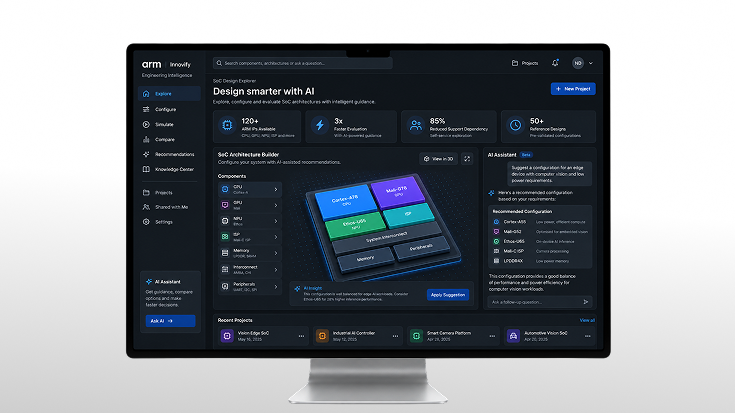
Innovify developed an AI-powered engineering intelligence platform that helps engineering teams navigate complexity, evaluate design options, and access critical expertise through guided digital workflows.
Rather than replacing established engineering processes, the platform augments them by combining domain knowledge, workflow intelligence, contextual recommendations, and automation into a unified engineering experience.
The result is a platform that enables engineers to move through architecture exploration, configuration, and evaluation activities with greater speed, confidence, and consistency.
Engineering Intelligence Framework
At the core of the platform is a knowledge-driven engineering intelligence framework that captures domain expertise and embeds it directly into the design exploration process.
Engineering best practices, architecture guidance, evaluation criteria, validation logic, and decision support mechanisms are surfaced throughout the workflow, enabling engineers to make informed decisions without constant reliance on specialist intervention.
By transforming institutional knowledge into reusable digital intelligence, ARM created a scalable model for distributing engineering expertise across teams.
AI-Powered Decision Support
Complex engineering decisions often require access to vast amounts of contextual information.
The platform continuously surfaces relevant recommendations, architectural considerations, configuration guidance, and evaluation criteria based on user actions and design objectives.
This intelligent assistance helps engineers understand trade-offs more effectively, evaluate alternatives more efficiently, and navigate technical complexity with greater confidence.
Rather than searching across disconnected systems or relying solely on specialist consultations, engineers can access contextual expertise directly within the platform.
Guided Design Exploration
Engineers can independently explore architecture options, compare configuration choices, and analyse design trade-offs through structured workflows designed around real-world engineering processes.
Each stage of the journey provides relevant context, reducing uncertainty and helping users progress through evaluation workflows with greater clarity.
This approach enables teams to investigate a broader range of potential design options while maintaining engineering consistency.
Enterprise Knowledge Layer
One of the platform's most valuable capabilities is its ability to centralise engineering expertise into a shared knowledge ecosystem.
Design guidelines, validation rules, evaluation frameworks, architectural knowledge, and specialist insights are captured and made accessible through a structured intelligence layer.
This reduces dependence on tribal knowledge while improving knowledge transfer, organisational resilience, and engineering consistency.
Workflow Automation
Many engineering workflows require repetitive evaluation and validation activities that can consume valuable engineering time.
The platform streamlines these processes through automation, helping teams improve efficiency while maintaining quality standards.
Automated workflow orchestration reduces manual effort, accelerates decision cycles, and enables engineers to focus on higher-value innovation activities.
Cloud-Native Architecture
Built using a scalable cloud-native architecture, the platform supports distributed engineering teams, large-scale information processing, and evolving enterprise requirements.
The solution leverages modern infrastructure principles including microservices, API-first integration, and enterprise-scale deployment capabilities.
This provides ARM with the flexibility required to continuously evolve engineering processes as technologies, products, and design requirements advance.
API-First Engineering Ecosystem
The platform was designed to integrate seamlessly with existing engineering systems and enterprise technology environments.
Using an API-first approach, ARM can connect engineering workflows, data sources, simulation activities, and future intelligence capabilities into a unified ecosystem.
This creates a connected engineering environment that supports collaboration, scalability, and long-term innovation.
Results
- PCI DSS certification and FCA approval, ensuring full regulatory compliance
- Ultra-low latency transactions under 250 milliseconds, delivering a seamless user experience.
- Successful integration of multiple third-party APIs, including GPS, Xero, and CashFlows
The platform transformed how engineering teams access expertise, evaluate design options, and navigate increasingly sophisticated SoC architectures.
By converting specialist knowledge into guided digital experiences, ARM established a more scalable and accessible engineering model that supports innovation without compromising technical quality.
Key Outcomes
- Enabled self-service exploration of complex SoC architectures
- Improved access to engineering expertise across distributed teams
- Reduced reliance on specialist support resources during routine evaluation activities
- Accelerated architecture exploration and assessment workflows
- Improved consistency across engineering decision-making processes
- Streamlined evaluation and validation activities through workflow automation
- Created a scalable framework for sharing and preserving engineering knowledge
- Established foundations for future AI-assisted engineering decision support
- Increased engineering agility across globally distributed teams
- Delivered a cloud-native platform capable of supporting future innovation initiatives
Business Impact
Engineering organisations perform at their best when expertise can be easily accessed, applied, and scaled across teams.
By transforming specialist engineering knowledge into an intelligent digital capability, ARM created an environment where engineers can navigate complexity more effectively while maintaining high standards of quality and consistency.
Beyond process improvements, the platform established a strategic foundation for future engineering innovation by enabling knowledge, workflows, and decision intelligence to operate as connected digital assets.
The result is a more scalable engineering model where expertise becomes easier to discover, engineering decisions become more consistent, and innovation can move faster across increasingly complex design environments.
Why This Matters For AI-Powered Engineering
As engineering environments become increasingly data-rich and knowledge-intensive, organisations are exploring new ways to scale expertise without increasing operational complexity.
AI-powered engineering platforms represent a new category of enterprise solutions that combine knowledge systems, workflow intelligence, automation, and decision support to augment human expertise.
Innovify helped ARM create an engineering intelligence platform that demonstrates how enterprise organisations can transform fragmented expertise into guided digital experiences that improve productivity, accelerate decision-making, and support innovation at scale.
This approach aligns closely with Innovify's work through AI Labs, where emerging AI technologies are transformed into production-grade enterprise solutions, and its AI & ML Development Services, which help organisations design, build, and scale AI-native platforms


.png)